


Life in Rio de Janeiro: 15 Top Things You Don’t Know About Rio

INTERESTED IN LIVING IN RIO DE JANEIRO?
What is life in Rio de Janeiro really like? Many people imagine moving to Rio de Janeiro as endless days of beach bumming, samba-dancing, caipirinha-drinking, and outdoor living. That’s definitely the side of Rio that tourists get to experience, but for ex-pats, the reality is quite different.
The everyday chores of life still continue — opening banks, booking doctor appointments, sorting out visas, and work permits, to name a few — and all take place in an entirely new and often alien context.
While I do love Rio de Janeiro with all my heart, sometimes it leaves me scratching my head in bewilderment. But that’s the joy of living abroad, right? Here are 11 of many things that you don’t know about living in Rio de Janeiro Brasil until you actually move here.
⭐️ Before we move on, in 2022, the government announced a new Brazil Digital Nomad visa that allows individuals to stay in the country for up to two years. Read more about it here.
15 Things You Didn’t Know About Life in Rio de Janeiro
1. The bureaucracy will test your patience like nothing else before
Brazilian bureaucracy, at best, is a labyrinth of confusion, documents, and tears. Pretty much any legal procedure in Brazil is surrounded by a mysterious process that seems to differ from one person to the next and requires a huge list of documents that need to be copied and authenticated at the notary’s office.
Things such as getting your CPF (the Brazilian version of a tax number) are actually pretty straightforward, and I would recommend anyone staying a longer period of time in Brazil to get one. It’s necessary to book internal flights, order items online, and sign up for gym membership, among other things.
However, if a CPF is at level 1 bureaucracy if we can imagine levels of difficulty here. In 2017 I had to put together all my papers to get legally married in Brazil and let’s just say it was insane. The amount of time, money, and effort that needed to be done was incredible.
Life in Rio de Janeiro
2. You will learn not to take a plan a seriously
Making fixed, concrete plans in Rio is just not really a thing. Rather, they are loose ideas that may or may not happen, regardless of how enthusiastically they are met. Cariocas (Rio de Janeiro people) tend to be exceptionally friendly and love meeting new people and making a great first impression.
But this does lead to a habit of not being able to say ‘no’ and leads to deciding last minute what to do before canceling the other options. This surprised me in the beginning when I heard, Let’s meet and go to the bar Saturday!’I genuinely thought that this meant on Saturday, I would go to the bar and meet said person.
After a time, I began to realize that this meant it was just a possibility and not an actual set-in-stone meet-up. It’s nothing to take personally – in fact, I’m actually seeing the logic in keeping all your options open – but it takes a while to get used to.
☔️ Also, if it rains, forget your plans – the majority of your Brazilian friends will cancel. The logic here is there are so many sunny days in Rio, so why not just wait for one of those instead of going out in the rain? But there are plenty of things to do in Rio when it rains, so even if they cancel, you can still enjoy yourself.
Life in Rio de Janeiro
3. Putting used toilet paper in the bin and not in the toilet
The signs are in every bar and restaurant – do not put toilet paper in the toilet. Put it in the bin. Despite this, habits die hard, and you only ever really learn this rule when you’ve blocked a toilet in a public place. Or worse still, at a house party when there is someone waiting outside to get in.
The toilets in Rio de Janeiro – and Brazil in general – is they are rather prone to blocking, and added paper doesn’t help with their sensitive nature. Hence why it’s always better to avoid a socially embarrassing situation and spare the cleaner from this awful mess by simply putting used toilet paper – or anything else for that matter – in the bin and not inside the toilet.
GET YOUR FREE GUIDE!
30 things you need to know before you go to Rio de Janeiro…

Life in Rio de Janeiro
4. You Can ‘Technically’ Drink the Tap Water
In Rio and other big cities in Brazil, tap water is safe. The government has taken steps to filter the water, but unfortunately, they also added several chemicals and treatments which can give the water a not-so-pleasant taste. As a result, most people opt to drink bottled or filtered water.
But this doesn’t mean you must brush your teeth with filtered water or steer clear of fruits or vegetables that might have been washed with tap water. I’ve never had a problem with the water, and I have drunk it on several occasions.
Remember that tap water quality varies depending on where you are in Rio. Water in the favelas, for example, is not considered safe to drink. Make sure to ask before filling your glass with tap water, as you might regret it.
Life in Rio de Janeiro
5. Switch Out those High Heels with Flip-Flops
In Sao Paulo, high-end restaurants and clubs are the name of the game — where dressing up isn’t just a suggestion, it’s your ticket past the bouncer. But when you’re in Rio? It’s a different story, perfectly laid-back and effortlessly cool.
That doesn’t mean you can’t dress up, but the vibe is different. Your daily outfit will probably consist of a swimsuit, shorts, a pair of Haivanna flip-flops, sunglasses, and disheveled hair from your morning swim. Make-up? Forget it. Most of the time, it’s too hot to wear anything except for an extra layer of sunscreen to make sure you don’t burn.
Life in Rio de Janeiro
6. The body-conscious attitude will rub off on you
At least, that’s what I found personally and what I’ve noticed among my close ex-pat girlfriends. I never really cared too much, but after a couple of years living in Rio, I couldn’t help but notice the sport-centric and aesthetic-conscious lifestyle in Rio has rubbed off on me.
In Rio, people may not care about dressing up or wearing make-up, but they often do care about how their bodies look. Makeup isn’t so much of a big deal day-to-day, and in terms of fashion, a strong, lean body is the perfect accessory.
Cariocas are fitness-minded people, and that makes sense because most of them spend a lot of time in their swimsuits — that’s the great thing about living steps from the beach. In Rio, being strong is the new skinny, so it’s all about the muscles here – for men and women.
Life in Rio de Janeiro
7. You’ll Spend More Time Outdoors

Yes, Cariocas might be a little more body-conscious than most, but the good news is that getting fit is as easy as ever in Rio. Wherever you turn, there is an activity for you to do, like beach volleyball, hiking, CrossFit, surfing, Paddle-boarding, and so much more.
Rio is a type of city that subliminally forces you to go outside – even if you aren’t an outdoor type of person. I mean, I’ve never been a morning person. I hate waking up early and enjoy sleeping in. But for some strange reason, that’s not the case in Rio. I often wake up at 6 am without an alarm.
I also love walking down the boardwalk for hours and taking in this city’s magic. Out of all the cities that I’ve lived in (about 12 of them in total), Rio has been the one where I love jumping out of my bed in the morning and heading out to explore.
Life in Rio de Janeiro
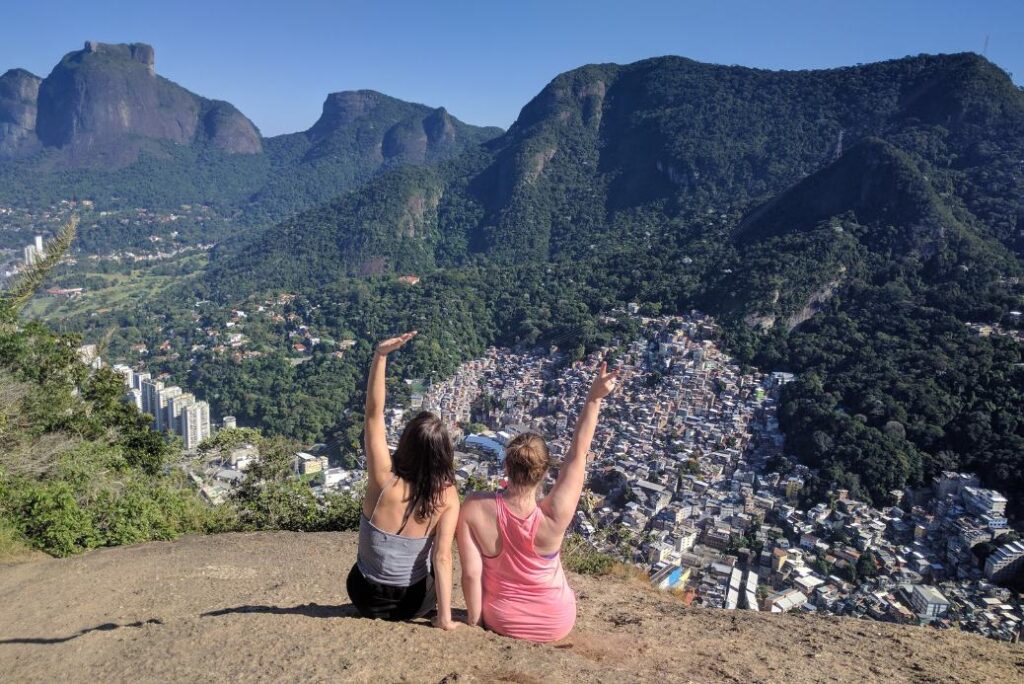
8. Even in the Bustling City, Nature is Always Close

Despite the hustle and bustle of Rio’s city life, a green escape is never far away. The city houses the Tijuca Forest, proudly known as the world’s largest urban forest. Then there are beaches — the coastline of the city of Rio de Janeiro stretches approximately 197 kilometers.
But the city’s natural beauty doesn’t end there. Lift your gaze skywards, and depending on where you are, you might catch a glimpse of Two Brothers Mountain, Sugarloaf of Christ the Redeemer.
But Rio is also within driving distance of several other beautiful weekend getaway destinations. There is Paraty, known for its historic town center; Buzios, an amazing beach resort-type of town and Ilha Grande, a tropical island famous for its scenic and unspoiled beauty.
When you’re in Rio, remember to look beyond the urban hustle – nature is closer than you think.
Life in Rio de Janeiro
9. You won’t be dodging bullets and violent encounters every day
Contrary to popular belief, Rio isn’t a minefield of violence. At least not in the tourist areas. Crime – such as armed assaults, shootings, and mass robberies – does happen. But it’s not as common as you may think.
Most of the time, this type of violence doesn’t happen in Zona Sul or the tourist zone, but in areas that you probably won’t visit, like the North Zone. Although I had a friend who lived in the north zone – in Tijuca, to be exact – but this area, from her experience, is great, and she loved it.
Nevertheless, one thing that I’ve noticed is how aware I have become of my surroundings and where my belongings are at all times. This doesn’t mean I don’t go out without my laptop and phone as I do, but I’m naturally much more careful with them now. I do understand that crime exists, but besides seeing it in the news, I don’t notice it in my day-to-day routine.
Life in Rio de Janeiro
10. You can visit A Favela (Just Be Careful)

That doesn’t apply to all favelas, and many are definitely out of tourist bounds. However, there are two that are still very welcoming to tourists. Vidigal is one of the safest favelas in Brazil (in fact, the safest) and is perfectly fine to visit.
It is the base point for the Dois Irmaos hike – it has plenty of bars and restaurants to visit – I actually used to live there for three months back in 2016. I actually loved it. I met so many friendly people, enjoyed the artistic vibe, and couldn’t get enough of the gorgeous views.
The other favela is Rocinha which is great for guided tours – it is the biggest favela in Brazil and has plenty of fascinating stories and insights. I would recommend though going there with a guide as some parts that are off the tourist path may not be 100% safe.
Life in Rio de Janeiro
11. Street art in Rio is amazing, and you will see it everywhere

One thing I didn’t expect when I moved to Rio was how much street art there is. In 2009, the Brazilian government legalized street art, allowing street artists to paint on the city’s walls as long as they had the building owner’s permission.
The result is amazing, and I love how expressive the art is. In Vidigal, there is a street that is totally free for street artists to make their mark. All around the city, there is so much artwork, some purely aesthetic, whilst others reflect societal feelings, such as the reaction to the World Cup in 2014 and opinions about police brutality and crime.
Life in Rio de Janeiro
12. Rio de Janeiro isn’t all about samba
Funk music is huge here. It’s not the funk music you may think of from America, but Brazilian funk, which comes with a whole culture, dance routine, and fashion style. Originating in the 1980s from the favelas of Rio de Janeiro, Brazilian Funk music has its roots in Miami Bass, incorporating unique local flavors.
It grew as an expressive outlet for marginalized communities, highlighting their struggles and joys. Today, its energetic beats and interesting lyrics make it a prominent symbol of Brazilian urban culture and resilience. Whilst butts are the main theme in a lot of the funk music, it’s not the offensively rude lyrics I was expecting and I actually really like funk music.
While everyone associates samba with Rio de Janeiro Brazil, and rightly so, funk music is definitely a music that defines Rio too. And more so, whatever you may think of it, you will probably learn to love it the longer you live here. The dance, however, I haven’t (and probably never will) got the hang of – think ‘twerk’ and that’s pretty much dancing to funk.
⭐️ Anitta, a powerhouse in the global music scene, has been instrumental in catapulting Brazilian Funk into mainstream popularity, breaking cultural and language barriers along the way. My favourite Anitta funk songs include: No Chão Novinha, Vai Malandra, Rave De Favela and Modo Turbo.
Life in Rio de Janeiro
13. The sea is really cold
The word ‘tropical’ is practically considered synonymous with Rio de Janeiro and this instantly makes you think of gorgeous beaches (which it has), crystalline oceans (Umm, sometimes), and warm bathe-worthy waters (absolutely, no).
The sea in Rio is actually very cold, which is a refreshing relief in the sweltering hot summers, but it’s not so favorable in the winter. Sometimes, the shallows at Arpoador can feel warm in the middle of summer as it takes in all of the day’s incredible heat, yet the majority of the time, brace yourself for a chilly dip.
Life in Rio de Janeiro
14. There are women-only carriages on the subway
During certain hours in the early morning and the evening – around the rush hour period – there are certain carriages for women only. Absolutely no men are allowed in. Normally if a man does enter, it is usually by accident, and he will have to endure the awkwardness of waiting for the next stop before he can hurry out and go to the appropriate carriage.
Usually, though, the guards spot any male intruders and give them a quick warning to leave. The carriages are there to offer women privacy and comfort of traveling to work or throughout the city during the busiest times without worrying about unwanted attention.
Life in Rio de Janeiro
15. The Food Scene is Growing

Now, I know you’ve heard of feijoada and caipirinha. Classic Rio stuff, right? But let me tell you, the food scene here has more layers than an onion. Take a walk around, and you’ll find the streets are a smorgasbord.
Along with typical Brazilian food, there are unique restaurants popping up all around Rio de Janeiro. In fact, Botafogo is becoming quite the hipster neighborhood, home to wine bars, artisanal bakeries, and every type of restaurant imaginable.
Life in Rio: Frequently Asked Questions
Is Rio Brazil a good place to live?
Living in Rio de Janeiro can be a unique and vibrant experience. The city offers stunning natural beauty, rich cultural heritage, lively nightlife, and a relaxed lifestyle. However, like any metropolis, it has its challenges.
Some challenges include traffic congestion, high living costs in certain areas, and social inequality. It’s important to do thorough research and ideally spend some time in the city before deciding to move permanently.
how many people live in rio?
The population of Rio de Janeiro city is around 6.7 million people. However, the larger metropolitan area, which includes surrounding suburbs and municipalities, housed over 13 million residents
How much money do you need to live comfortably in Rio de Janeiro?
A single person might live comfortably in Rio de Janeiro with around R$5,000 – 7,500 (USD$1,000-1,500) per month. This estimation should cover essentials plus some leisure activities. But remember, costs can greatly vary depending on your lifestyle and where you live in the city
What is good about living in Rio de Janeiro?
Living in Rio de Janeiro brings several positives. The city’s natural beauty is stunning, with world-famous beaches, lush forests, and iconic landmarks like Sugarloaf Mountain and Christ the Redeemer. The vibrant culture is reflected in music, dance, and lively festivals, especially Carnival.
Cariocas enjoy a laid-back lifestyle and are generally warm and welcoming. Rio also has a dynamic food scene, from fine dining to diverse street food. Plus, outdoor and sports enthusiasts will love the year-round sunny climate.
best places to live in Rio de janeiro
Popular areas to live in Rio de Janeiro include the stylish beach neighborhoods of Ipanema and Leblon; the lively and iconic Copacabana; the peaceful, family-friendly Jardim Botânico; the scenic Lagoa, located around a lagoon; and Santa Teresa, known for its bohemian vibe and colonial architecture
is it safe to live in rio de janeiro?
Safety in Rio de Janeiro can vary by neighborhood. While the city has areas with high crime rates, many neighborhoods are safe and welcoming. Like any large city, it’s important to be aware of your surroundings, avoid risky areas, especially at night, and take precautions against petty crime. Engaging with local residents and expat communities can provide current, detailed safety information.
Final Thoughts: Life in Rio de Janeiro

Weighing the pros and cons of living in Rio de Janeiro gives you a full picture of what life here entails. The disadvantages of living in Rio de Janeiro can be real, with safety concerns and education quality varying across the city. However, living in Rio de Janeiro as an American also offers unique rewards – the embrace of a vibrant culture, the warmth of Rio people, and the experience of Brazil living conditions that diverge from American norms.
While understanding what is Rio de Janeiro like involves much more than a snapshot of its geography or a summation of life in Brazil, it’s vital to note that what is Rio like geography does shape experiences. This city’s natural beauty and urban challenges are interwoven with the quality of life in Rio de Janeiro.
Rio expat communities can offer valuable insights and support for newcomers navigating Rio de Janeiro living. If you’re considering living in Brazil and specifically living in Rio de Janeiro as an American, tapping into these resources could make the transition smoother and richer.


Bureaucracy in Brazil? oh man, you need to know Portugal. Here bureaucracy is taken seriously. Bureaucracy in Brazil is a beautiful baby compared to Portugal
Bureaucracy in Brazil? It’s all about $$$ and who you know.