

Feijoada: A Complete Guide to Brazil’s National Dish

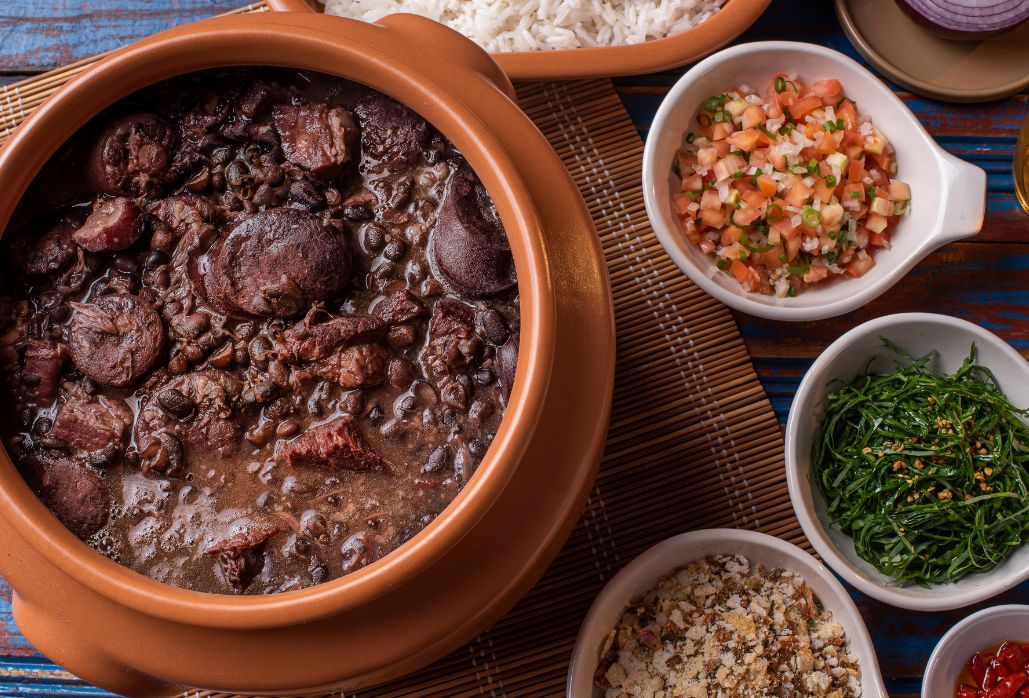
Every country has a dish that represents its unique culinary heritage, and for Brazil, it is undoubtedly the feijoada. A soulful, hearty stew, Feijoada captures the essence of Brazilian cuisine with its comforting depth of flavors and vibrant cultural history.
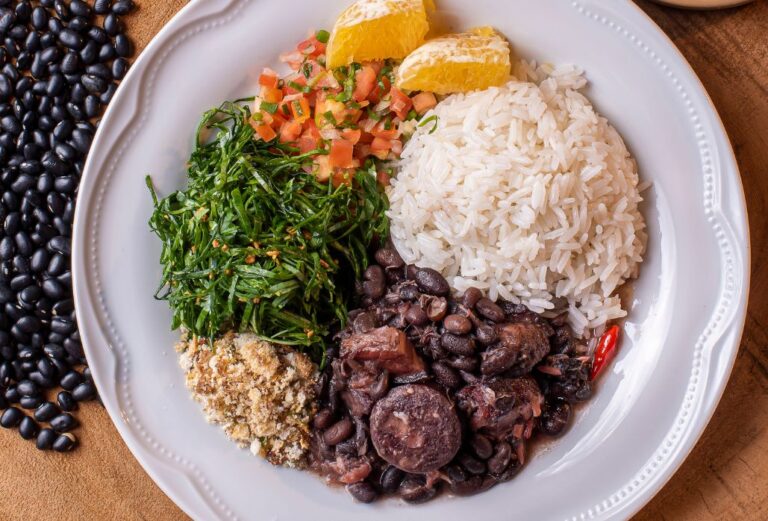
The feast is a serving of black beans in their own juice with salted pork, chunks of beef, smoked sausage, and strips of jerked beef accompanied by fried kale, crispy mandioca, fluffy white rice, pork crackling, and farofa (fried cassava flour) with bits of bacon, perfect for mopping up the last of the bean juice. A few slices of oranges are mandatory to aid the digestion of this hearty meal.
In this blog post, we will embark on a journey to explore feijoada, Brazil’s national dish, in all its glory. If you’re a fan of Brazilian food, feijoada is a culinary masterpiece you don’t want to miss.
Where Did Feijoada Come From?

The story of feijoada dates back a few centuries, offering a glimpse into Brazil’s diverse past. The widely accepted theory about its origin ties the dish to the era of slavery. African slaves, resourceful and resilient, gathered leftover feijoada beans and scraps of meat from their masters, turning these into nourishing stew. This creation marked the birth of the dish that would evolve into the renowned feijoada Brasileira.
Yet, this theory isn’t universally accepted. Some academics propose an alternative origin story, suggesting that the European settlers in Brazil during the 16th century might have played a role in the creation of feijoada. Beans were a staple, economical, and versatile food item in their diet. By adding chunks of meat to beans, they created a simple, flavorful stew, potentially the forebear to modern feijoada.
The Cultural Context of Feijoada in Brazil
Regardless of its exact origins, feijoada has become a cornerstone of Brazilian cuisine and culture over the centuries. This brazilian black bean stew has evolved from its modest beginnings to become a symbol of Brazil’s diverse culinary heritage. Whether you’re in a countryside dwelling or amidst the urban bustle of São Paulo, feijoada is a cherished presence, signifying unity and celebration.
Today, feijoada is more than a dish—it’s a gastronomic phenomenon that transcends regional boundaries and socioeconomic classes, embracing all who appreciate the warmth and comfort of Brazilian cuisine.
What is Feijoada?

But what is feijoada exactly? Feijoada hinges on a core set of ingredients that define its distinct taste. The recipe calls for Brazilian black beans, and a variety of meat, including smoked sausage, salted pork, bacon, ham hock, and different cuts of beef. Some traditional versions may even include less common ingredients like a pig’s feet or ears, tail, or beef tongue, contributing to its unique taste and texture.
The supporting cast of ingredients includes rice, sautéed collard greens, farofa (toasted cassava flour), and orange slices. These are typically served alongside the feijoada, each adding its own flair to the meal and balancing the hearty stew.
In the vast landscape of Brazilian culinary traditions, feijoada might seem uniform at first glance: a hearty stew of beans and meats. However, the dish’s identity is as diverse as the country itself.
The Varieations of Feijoada

In the vast landscape of Brazilian culinary traditions, feijoada might seem uniform at first glance: a hearty stew of beans and meats. However, the dish’s identity is as diverse as the country itself.
The traditional feijoada, usually seen in old family cookbooks and some restaurants, doesn’t shy away from using the less common cuts of the pig, including ears, trotters, and tails. This version is deeply rooted in the past, keeping the memories alive of a time when every part of the animal was used out of necessity.
However, today, you’ll encounter a different version of feijoada. Here, black beans mingle with assorted pork and sometimes beef cuts, creating a Brazilian stew that appeals to contemporary tastes while still nodding to its origins.
Further variations of feijoada spotlight Brazil’s regional culinary diversity. In Bahia, pinto beans take center stage, and the stew gets a vegetable boost with plantains, collard greens, and more. Para State flips the script entirely with maniçoba, where beans are out, and manioc leaves are in. The bean of choice also differs by state, with black beans being the standard, but Bahia sometimes opts for red or brown beans. Regardless of the region, a flavorful medley of meats remains a consistent element of this beloved Brazilian food feijoada.
Feijoada Simple vs Completa
Feijoada Completa and Feijoada Simple refer to the complexity and completeness of the feijoada meal.
Feijoada Completa is the full, traditional feijoada meal. It includes the feijoada stew (made with a variety of meats and black beans), served with a range of accompaniments including white rice, collard greens (couve), farofa (toasted manioc flour), vinaigrette sauce, and orange slices.
On the other hand, Feijoada Simples, or simple feijoada, generally refers to a more pared-down version of the dish. It might only include the feijoada stew and one or two accompaniments, like rice and farofa. The types of meat used in the stew might also be less varied in the simpler version.
The Feijoada Experience: More than just a meal
The feijoada experience transcends the act of merely eating a meal. Partaking in feijoada Brasileira is a cultural immersion, a symbol of Brazilian hospitality, and a time-honored tradition that brings people together.
Not to mention, it’s the perfect excuse for an afternoon siesta. This Brazilian black bean stew is traditionally eaten as a leisurely lunch, often followed by a relaxed rest period to digest the hearty meal. It’s not just about fueling the body but also about taking a pause, savoring the food, and relishing the moment.
The best days to eat feijoada, as a result, are on Saturday or Sunday at lunchtime. Conversations flow, laughter echoes, and bonds strengthen around this communal meal, encapsulating the true spirit of Brazilian social life.
The Difference between Portuguese and Brazilian Feijoada

Though feijoada is synonymous with Brazilian cuisine, its roots can be traced back to Portugal. However, like distant relatives who share a family name but have distinct personalities, Portuguese and Brazilian feijoada are quite different.
Portuguese feijoada is typically made with red or white beans. Various cuts of pork, including ears, snout, and trotters, make their way into the pot, and sometimes even beef or chicken. Vegetables like tomatoes, carrots, and cabbage add depth to the stew, and the dish is commonly served with rice and orange slices.
On the other hand, the Brazilian feijoada is known for its black bean stew Brazilian style. The bean of choice is black, and the meats involved are mostly pork-based, including sausages and a variety of cuts.
⭐️ While both dishes share a name and a foundational concept—a stew of beans and meat—their variations in ingredients and accompaniments reflect the culinary influences and local produce of their respective countries.
Where To Eat Feijoada In Rio De Janeiro

In Rio de Janeiro, there are several places to enjoy this food for the soul. Traditionally eaten on Saturday, those who are keen to try this national dish needn’t wait and can head to Casa da Feijoada in Ipanema any day of the week.
The casual atmosphere of the restaurant sets the scene for this homely cuisine, and waiters bring out a stream of separate dishes to complete the whole feijoada spread. Most diners will order carne nobre – these are typical prime cuts of meat. However, those who feel daring can try the traditional feijoada that comes with additional meats such as pigs’ tails, ears, and trotters.
Bar do Mineiro in the heart of Santa Teresa is renowned for its authentic, hearty feijoada. The boteco-style restaurant has a friendly, local vibe, with black and white photos hung up on the wall and paintings and artifacts above the bar. The rows of cachaça seem endless and make for a flawless caipirinha.
Order a classic lime one as an alternative citrus digestive aid for your feijoada. Another feijoada hotspot in town is at Academia da Cachaça where generous portions allow enough for two and are served with a shot of honey and lemon cachaça.
Let’s now venture into making your own feijoada at home. Are you ready to discover an easy feijoada recipe?
Preparing Feijoada Brazilian Food: An Inside Look

Creating an authentic feijoada at home is an exercise in patience and love for the culinary craft. This isn’t your quick mid-week meal, but a comfort food meant to simmer slowly, coaxing out complex flavors from simple feijoada ingredients.
Starting with dry black beans (no canned beans), the foundation of the dish. They are traditionally soaked overnight to ensure they cook evenly. Meat is a crucial player, typically involving a mix of carne seca (Brazilian dried, salted beef), pork shoulder, and smoked ham. These provide a depth of flavor and heartiness that make feijoada incredibly satisfying.
Cooking feijoada is a slow and deliberate process. Combining the beans, meat, onions, garlic, bay leaves, salt, pepper, and water in a slow cooker or instant pot, the stew is allowed to simmer and meld together for hours. This slow cooking process ensures all the flavors are perfectly mix together.
Though the stew itself is rich and hearty, the sides that accompany a Brazil feijoada are equally important. Toasted manioc flour (farofa) adds a delightful crunch, balancing the creaminess of the beans. Sautéed collard greens bring a touch of bitterness that complements the savory stew. Lastly, slices of fresh orange provide a burst of acidity that cuts through the richness, brightening up the palate.
Preparing feijoada at home is more than just following a recipe for feijoada; it’s about appreciating each ingredient and the role it plays in the dish. And, with minor tweaks, you can certainly create a healthy feijoada recipe that doesn’t compromise on the traditional flavors.
⭐️ Alternatively, try making it at home! I found this great Brazil feijoada recipe that I’m keen to try out soon. If you have any other recipes or recommendations in Rio for a great feijoada or have some tips on how to make it yourself, do get in touch. I’d love to hear from you!
Brazilian Feijoada: Frequently Asked Questions

What does feijoada consist of?
Feijoada is a hearty Brazilian stew consisting primarily of black beans and various types of meat, usually pork and beef. It’s often accompanied by white rice, farofa (toasted manioc flour), sautéed collard greens, and fresh orange slices. The dish may vary regionally, with different beans or added vegetables.
What is feijoada famous for?
Beyond its delicious taste, feijoada represents Brazilian history and culture, making it a symbolic dish that embodies the nation’s diverse culinary heritage. It’s not just a meal — it’s an experience!
What is the difference between feijoada and cassoulet?
Feijoada and cassoulet are both hearty bean stews, but they come from different culinary traditions and feature distinct flavors.
Feijoada originates from Brazil and is typically made with black beans, various cuts of pork, and sometimes beef. Its accompaniments often include rice, toasted manioc flour, sautéed collard greens, and orange slices.
On the other hand, cassoulet hails from France and traditionally contains white beans, pork, sausages, and sometimes mutton or duck. The taste profiles and ingredients reflect their respective cultural origins.
What is the meaning of feijoada?
Feijoada is a Portuguese term derived from the word ‘feijão’, which translates to ‘beans’. Given its central ingredient, the name is fitting. This stew, often called the national dish of Brazil, is a hearty blend of black beans (feijoada beans), various cuts of meat, and spices.
Why is feijoada served with orange?
Feijoada is traditionally served with orange slices because the citrus helps to balance the heavy, rich flavors of the stew. Oranges not only provide a refreshing, tangy contrast, but also assist in digestion.
Is feijoada healthy?
Feijoada can be a healthy dish, depending on its preparation. The beans provide a good source of fiber and protein, and the collard greens are packed with vitamins.
However, the traditional recipe includes various cuts of meat, some of which can be high in fat. To make a healthier version, one could use lean meats, lower the salt content, and increase the number of vegetables. It’s all about balance and moderation.
Final Thoughts: Why We LOVE Brazilian Feijoada

Feijoada stands tall as the epitome of Brazilian cuisine. This rich and hearty stew, loaded with black beans and a medley of meats, encapsulates the country’s culinary soul. More than just Brazil’s national dish, it’s a symbol of history, a unifier at social gatherings, and a comfort food that warms you from the inside out.
Embarking on the adventure of making your own Brazilian feijoada recipe can be an exciting culinary journey. Whether you opt for a traditional feijoada completa or a pared-down feijoada simple, the essence of this dish lies in its harmonious blend of flavors.
In the end, as you enjoy your feijoada, you’re not just consuming a meal—you’re partaking in a piece of Brazil’s rich cultural fabric captured in a stew pot. So take a few minutes to appreciate this view into Brazil’s culinary heart. You won’t regret it.


One Comment